A live ride screen that follows the road
A phone on the bars has to earn its place next to a dedicated bike computer. This update reworks the live ride screen around one idea: it should know where you are on the road, and show you what matters there.
Climbs that appear when you reach them
On a route with climbs, the climb page now takes over as you approach one — about 200 metres out, not kilometres ahead — and holds for the whole climb, showing the profile, your position on it and the distance and metres to the top. When the climb ends it hands back to the page it took over from. Descents work the same way, because a descent is the half of a hill where you can get hurt.
A course that knows which way you are riding
If you leave a loop and ride it home in reverse, everything that reads the road ahead now reads it from the other end: the climbs coming up, the next turn and the off-course warning. You are no longer offered the climbs you have just ridden as if they were in front of you.
The camera and the radar, on every page
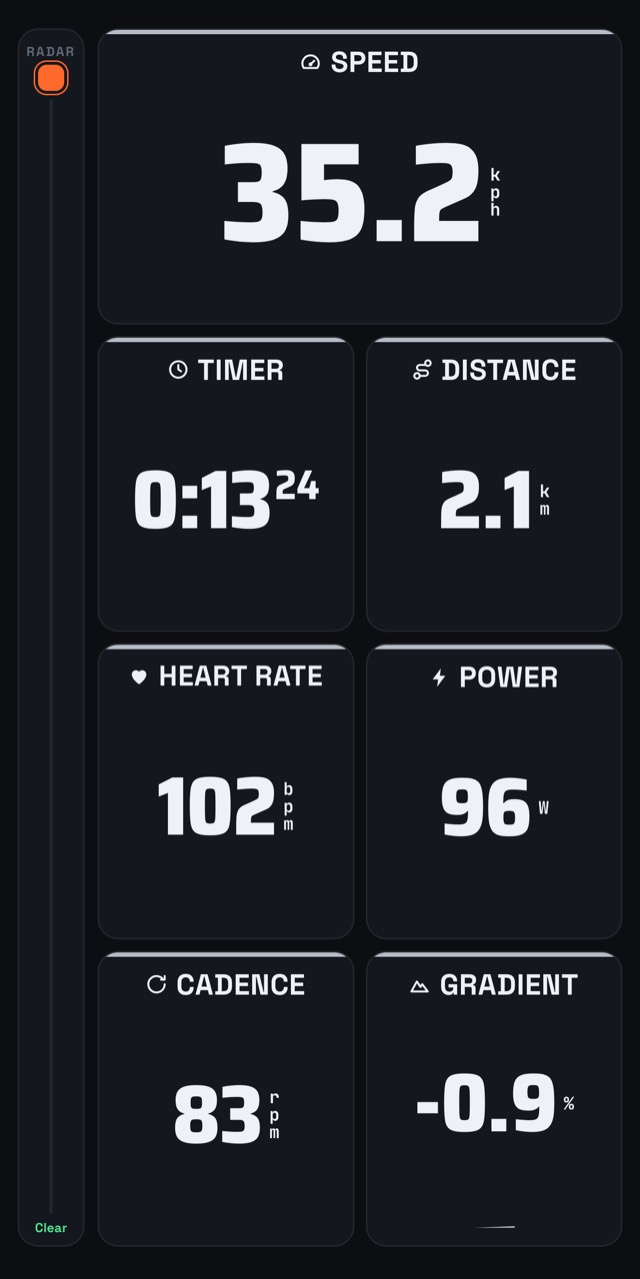
If you ride with a camera — an Insta360 or a Drift Ghost — its live view follows you from page to page as a small tile in the corner, and a tap goes to the full-size view. The radar rail is on every page that does not already show the group column.
We also fixed a radar bug that mattered: a Varia says nothing until there is a car behind you, and the app was treating that silence as a dropped connection and reconnecting every fifteen seconds. A radar is now never reconnected just for being quiet.
Every field fed from a real source
A pass over all the data fields found a third of them showing a permanent dash. Moving time, laps, time in zones, IF and TSS, W/kg, heading, bearing, distance remaining, ETA, vertical speed and pedal balance are now fed from real sensors and the route. Fields with no possible source were retired rather than left blank, because a blank field reads as a sensor that has failed.
A heart-rate strap that stops sending now shows a dash after a few seconds instead of holding its last number for the rest of the ride, and every ordinary field on a page shares one number size, so the page reads as one display.
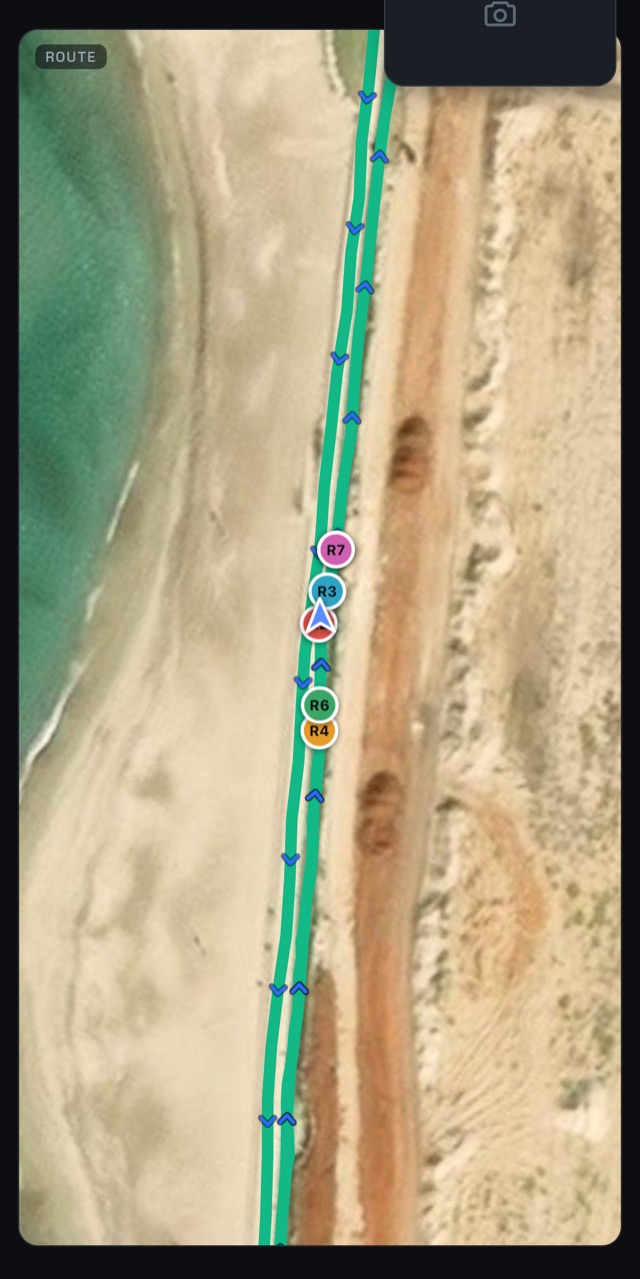
Pages still rotate on their own while you ride, you still build them yourself from more than fifty fields, and a long press on any field edits it. For group rides, see pack dynamics.